01 · Introduction
When you first log into a brand-new OCI tenancy, everything feels deceptively simple. You create a single Virtual Cloud Network (VCN), spin up a couple of subnets, and deploy a handful of Compute instances to run your application. The routing tables are basic, the security lists are wide open, and your application works beautifully on day one.
Then success happens. More engineering teams arrive, production workloads expand, and development environments multiply. Suddenly, you find yourself managing dozens of overlapping IP addresses, an unmanageable web of local VCN peering gateways, and security policies that nobody fully understands. The clean environment you started with has transformed into an operational nightmare where governance has vanished, and security audits become terrifying events.
Oracle realized this pattern repeated itself across thousands of enterprise cloud migrations. To solve it, they developed a comprehensive blueprint built to handle massive scale from the very beginning. Let's walk through the architecture Oracle recommends for enterprise OCI deployments — and why nearly every large production environment follows it.
- Definition: OCI Hub-and-Spoke Architecture
- An enterprise OCI Hub-and-Spoke network layout is a topology where a centralized Hub VCN manages transit security and on-premises connectivity, while isolated Spoke VCNs host individual application workloads — connected via DRG v2 transit routing rather than point-to-point peering meshes.
02 · The Single VCN Anti-Pattern vs. Enterprise Isolation
Why Oracle doesn't recommend putting everything inside one VCN
Putting your entire cloud footprint inside a single VCN feels like the path of least resistance. It eliminates the need for complex internal routing, simplifies DNS resolution, and lets your instances talk to one another without traversing virtual network boundaries. In the early stages of a project, this approach saves time and keeps your configuration straightforward.
However, as your deployment grows, this initial simplicity turns into a dangerous architectural trap. A single VCN exposes you to a massive blast radius; a single misconfigured security list or route table entry can instantly expose your critical production databases to the public internet or an unvetted development server.
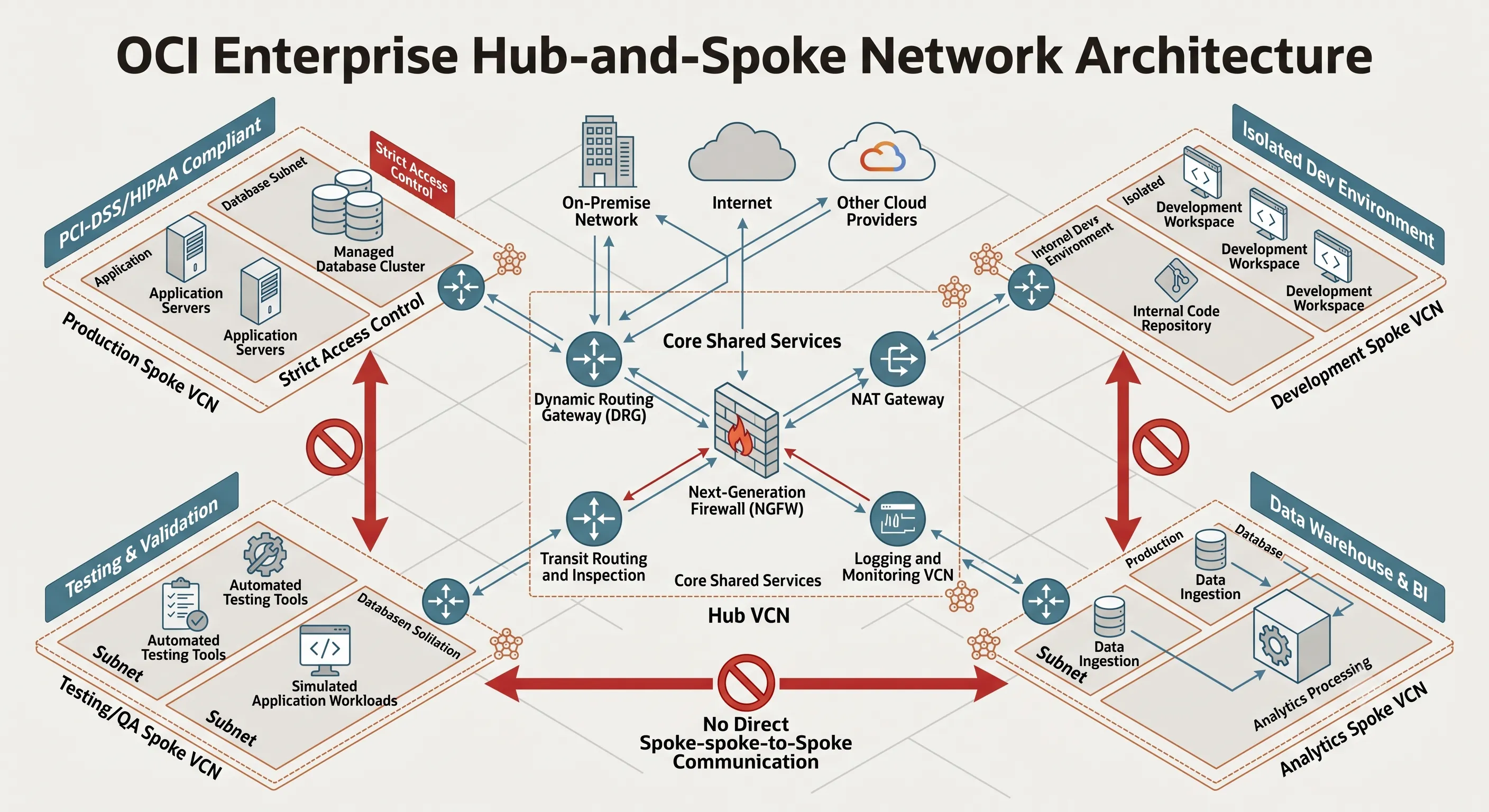
Figure 1 · Enterprise Hub-and-Spoke OCI Network Architecture
Enterprises separate environments to isolate business units, applications, and compliance tiers. When production, development, testing, and analytics components share a single network boundary, managing noisy neighbors becomes impossible, and meeting strict regulatory standards like PCI-DSS or HIPAA becomes an operational nightmare.
To solve this, Oracle recommends the Hub-and-Spoke architecture pattern. Instead of a single massive network, you build an interconnected ecosystem of isolated VCNs. Each environment or major business application receives its own dedicated "Spoke" VCN, which remains completely isolated from other spokes unless traffic is explicitly allowed and routed through a central "Hub" VCN. This separation ensures that an operational failure or security breach in a development environment remains entirely contained, protecting your mission-critical systems.
In my experience managing enterprise cloud migrations, overlapping CIDR blocks are the single most costly mistake to remediate post-production — often requiring weeks of complex network remapping. Plan non-overlapping address space (e.g., 10.0.0.0/16 for Hub, 10.1.0.0/16–10.50.0.0/16 for spokes) before provisioning your first VCN.
04 · Orchestrating Transit Routing via OCI DRG v2
Why enterprise OCI environments use a DRG as the center of everything
In the early days of OCI, connecting multiple VCNs required configuring a complex web of Local Peering Gateways (LPGs). While LPGs work well for small, point-to-point connections, they do not support transit routing. If Spoke A needed to talk to Spoke B through a central Hub, you had to jump through complex architectural hoops. As you added more networks, the architecture quickly degraded into an unmanageable mesh configuration.
The modern Dynamic Routing Gateway (DRG v2) changes everything. It is no longer just a simple gateway for VPNs and FastConnect circuits; it serves as a highly scalable, fully programmable distributed router that functions as the core of your enterprise cloud network.
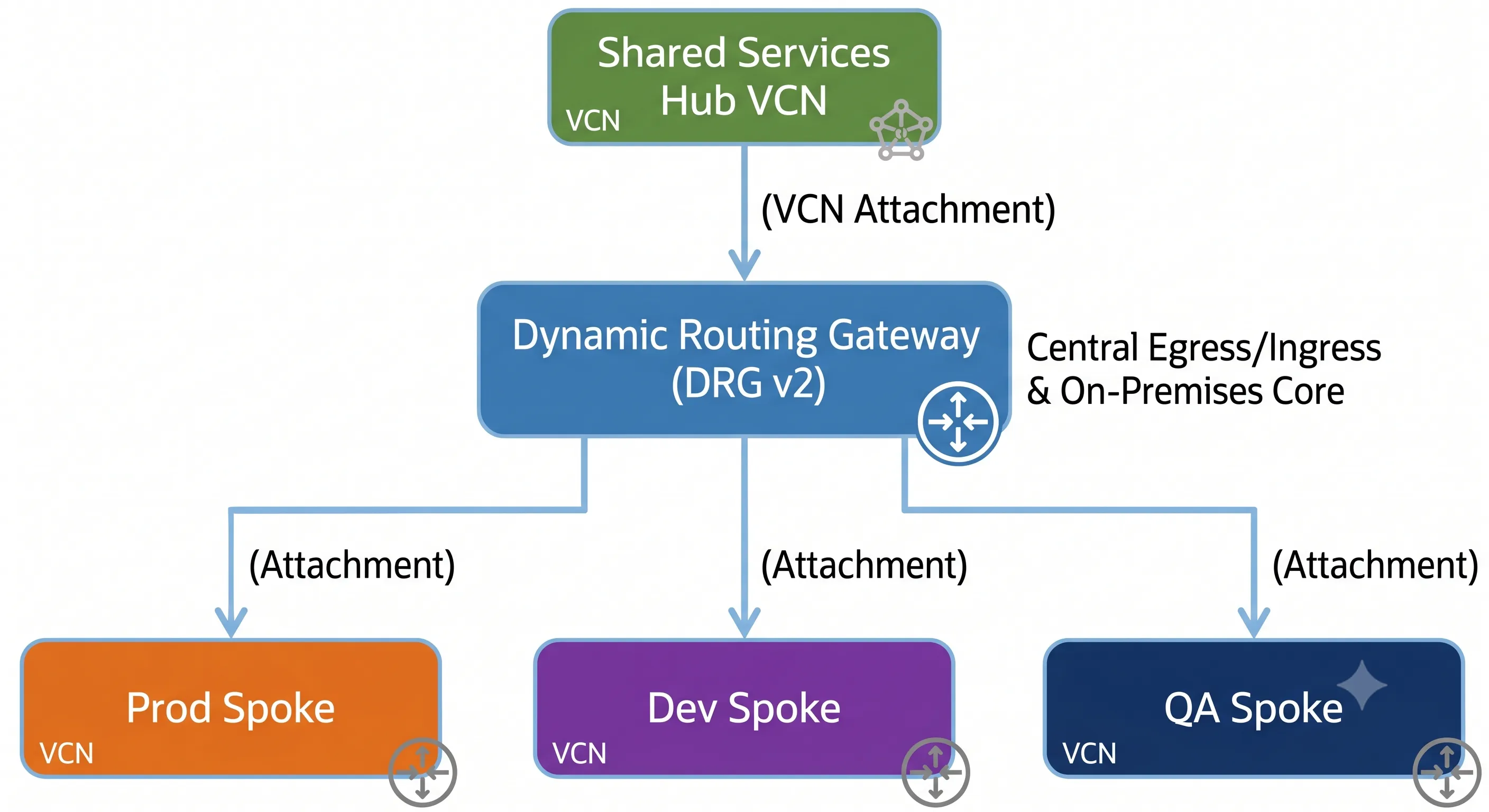
Figure 2 · OCI DRG v2 as the enterprise connectivity hub
The DRG acts as the centralized transit point by supporting native VCN attachments, cross-region Remote Peering Connections (RPCs), and on-premises hardware connections via IPSec VPN or OCI FastConnect. By decoupling the routing logic from the individual VCNs, the DRG allows you to build custom route tables and import/export distributions directly at the network core.
When a workload in your Production Spoke needs to communicate with your on-premises data center, the traffic flows directly into the DRG VCN attachment, evaluates the DRG route table, and moves straight down the FastConnect circuit. If that same spoke needs to communicate with the Shared Services VCN for log forwarding, the DRG handles the packet transit internally without sending it out to the public internet or requiring complex peering rules.
Transit flow: On-premises traffic enters via DRG, passes through centralized NGFW inspection, then routes to the target spoke VCN attachment.
05 · Enforcing Deterministic OCI Security Zones
Why Security Zones are becoming the default for enterprise OCI deployments
Human error remains the single greatest risk to cloud infrastructure security. No matter how well you train your engineering teams, an administrator operating under pressure or working late at night will eventually make a mistake. They might provision a public IP address on a secure database instance or create an unencrypted Object Storage bucket to quickly share a large log file.
Traditional security strategies rely on reactive auditing. Tools scan your environment every few hours, identify non-compliant resources, and alert your security team to fix them. While valuable, this approach leaves a dangerous window of vulnerability between the time a resource is misconfigured and when it is remediated.
Oracle Cloud Infrastructure Maximum Security Zones solve this by shifting your security posture from reactive alerting to deterministic prevention. A Security Zone is a compartment associated with a strict, Oracle-defined security recipe that cannot be bypassed or modified by anyone — including tenancy administrators.
Platform-enforced guardrails inside a Security Zone:
- Absolute Denial of Public Access: Any attempt to assign a public IP address to a compute instance or public endpoint is instantly blocked.
- Mandatory Customer-Managed Encryption: Resources like Block Volumes and Object Storage buckets must use keys managed via the OCI Vault service (Key Management Service / KMS).
- Data Integrity Protections: Object Storage buckets cannot be made public, and retention rules prevent accidental deletion.
- Restricted Resource Shapes: Only vetted, secure compute shapes and platform configurations are permitted.
Instead of writing complex IAM policies to catch mistakes after they happen, Security Zones stop insecure configurations from being created in the first place. This automated enforcement gives your compliance teams peace of mind, knowing that your most sensitive data repositories are protected by platform-level guardrails aligned with frameworks like the CIS Oracle Cloud Infrastructure Foundations Benchmark.
06 · Decoupling Network Topology from Cloud Governance
Why Oracle's reference architectures separate networking from governance
A common mistake made during early cloud deployments is treating your network layout as your primary management boundary. Teams often assume that because they have separated production and development traffic into distinct VCNs, they have also solved their governance, access control, and cost accounting requirements.
In reality, networking and governance solve completely different operational challenges. Networking manages the data plane, determining how packets travel between compute instances and databases. Governance manages the control plane, defining who can create resources, how those resources are accounted for financially, and how their lifecycles are maintained.
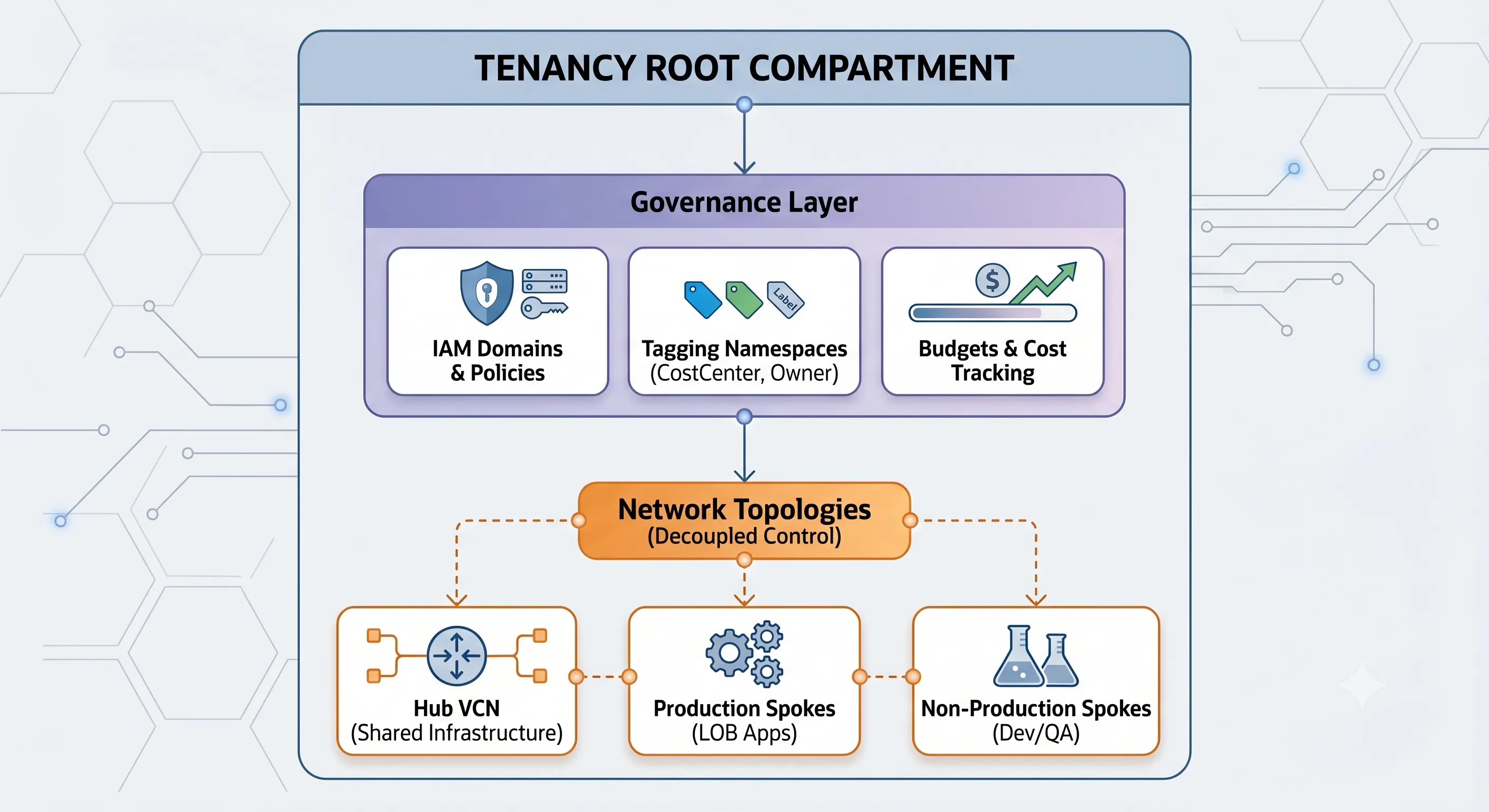
Figure 3 · Enterprise Security Zone and Governance Design
Oracle's enterprise architecture separates these concerns by leveraging Compartments, IAM Policies, Tagging Namespaces, and OCI Budgets as an independent management layer above the physical network. Compartments are purely logical collections of cloud resources that do not impose any network restrictions on their own. You can house a database in a secure database compartment while attaching it to a VCN located in a completely different network management compartment.
By separating these layers, your network engineers can manage firewalls, route tables, and gateways without needing access to the applications running inside those networks. Concurrently, your application teams can deploy instances and manage their software lifecycles without risking changes to the underlying corporate network infrastructure.
Implementing a robust tagging strategy (such as mandatory Project_ID, Environment_Type, and Cost_Center tags) combined with OCI Budgets ensures that you can track spend down to the penny across multiple VCNs, business units, and geographical locations.
07 · Scaling East-West Traffic Across Spoke Networks
How Oracle recommends connecting hundreds of applications together
As your cloud footprint expands to support hundreds of unique applications, managing inter-application communication can become a significant challenge. If every application team builds independent connections to every other workload they interact with, your network quickly degrades into a complicated web that is impossible to audit, secure, or maintain.
Oracle's enterprise recommendation relies on a clean Hub-and-Spoke routing model powered by the DRG, private DNS architectures, and strategic utilization of OCI Service Gateways.
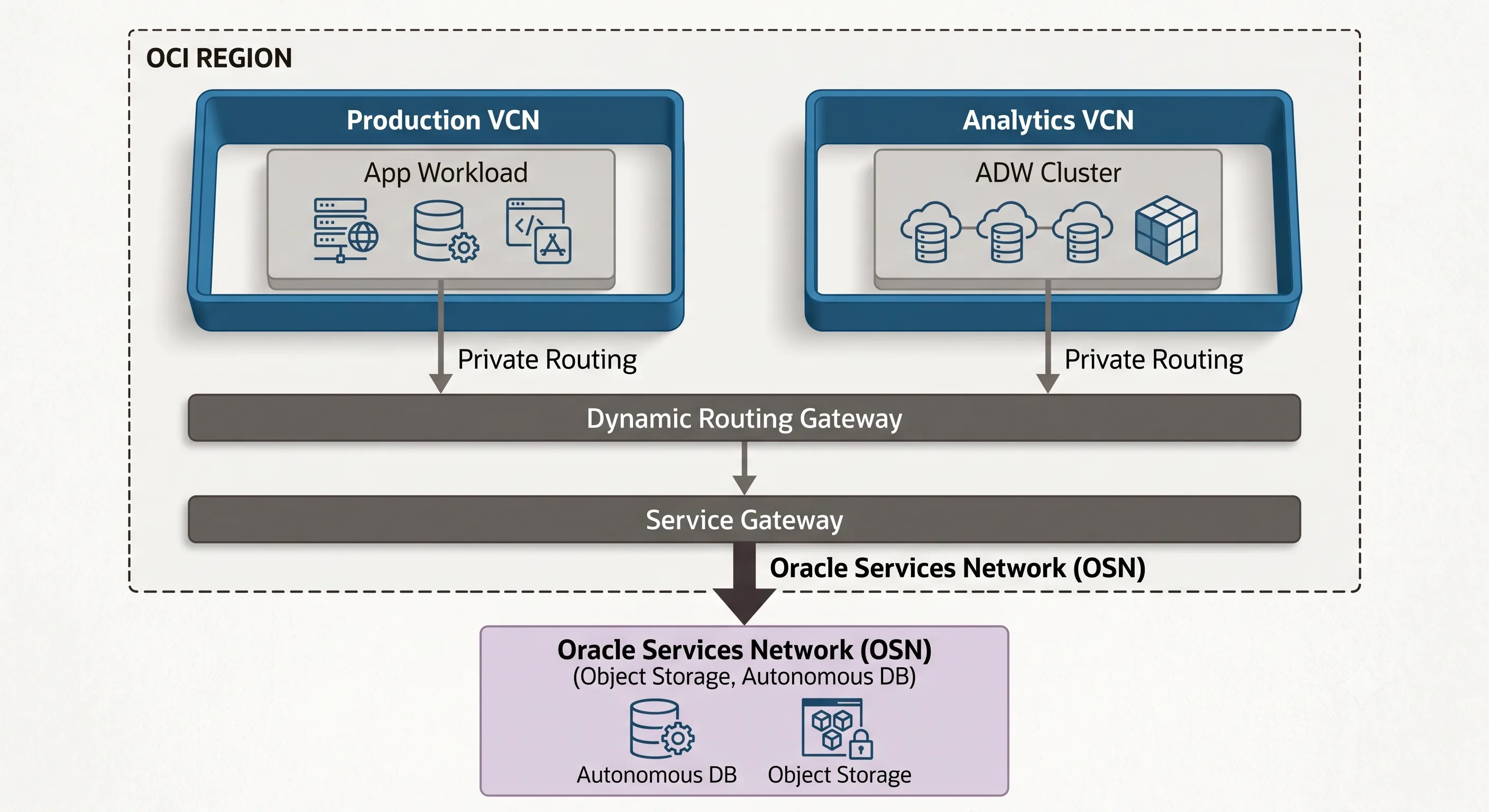
Figure 4 · East-west traffic and Service Gateway routing across spoke VCNs
East-west traffic (spoke-to-spoke)
When Application A in Spoke 1 needs to query a database managed by Application B in Spoke 2, the request is directed to a private IP address. The local spoke route table directs the traffic to the DRG, which evaluates its central route policies and forwards the packet directly into Spoke 2 — never crossing the public internet.
Oracle PaaS via Service Gateway
For dependencies on Oracle PaaS systems — such as Autonomous Data Warehouse or OCI Object Storage — attach an OCI Service Gateway to each individual VCN. The Service Gateway provides a secure, private pathway directly into the Oracle Services Network (OSN), eliminating the need to attach public NAT Gateways to your private application subnets.
Private DNS resolution
Name resolution across this distributed architecture is managed via OCI Private DNS views and zones. Each spoke VCN maintains its own private DNS zone, linked to a centralized resolver path in the Hub VCN. This allows an instance in your development network to resolve the FQDN of a production service seamlessly, provided that IAM and network routing rules explicitly permit the connection.
Asymmetric routing mitigation
When routing transit traffic through third-party firewalls in the Hub VCN, asymmetric routing can drop packets. Mitigate this using custom DRG route tables that explicitly map transit paths, or implement Source NAT (SNAT) inside the central firewall cluster so return traffic flows back through the same appliance interface.
08 · Common OCI Architecture Mistakes & Mitigations
What mistakes do most OCI deployments make before they reach production?
When reviewing OCI tenancies that are struggling with performance, security, or management issues, we consistently find the same group of early configuration mistakes. These issues usually stem from a desire to get workloads running quickly, without considering long-term operational impact.
| Architectural Mistake | Long-Term Consequence | Severity | Mitigation |
|---|---|---|---|
| Single VCN for all environments | Massive blast radius; dev mistakes expose production databases | Critical | Hub-and-Spoke with isolated spoke VCNs per environment |
| Overlapping CIDR blocks | Cannot peer VCNs or connect to on-premises; costly IP remapping | Critical | IPAM plan before first VCN; non-overlapping /16 per spoke |
| LPG mesh instead of DRG v2 | No transit routing; unmanageable N×N peering at scale | Critical | Centralize connectivity on DRG v2 with route distributions |
| Decentralized firewalls per spoke | Inconsistent security posture; 3–5× firewall licensing cost | High | Centralized NGFW pool in Shared Services VCN |
| Using compartments as network boundaries | False sense of isolation; governance conflated with networking | High | Separate data-plane (VCN) from control-plane (IAM/compartments) |
| Public NAT for Oracle PaaS access | Traffic exits to public internet for OSN services | High | Service Gateway per VCN for private OSN connectivity |
| Reactive security auditing only | Hours-to-days exposure window before remediation | High | Maximum Security Zones on production compartments |
| No tagging or budget strategy | Uncontrolled spend; no cost attribution across teams | Medium | Mandatory tags + OCI Budgets from day one |
| Skipping cross-region DR networking | Database replicated but network path undefined for failover | High | DRG-to-DRG RPC over Oracle private backbone |
Identifying and remediating these foundational flaws late in your cloud journey requires complex migrations, extensive downtime, and costly re-architecting. Address them before your first production instance goes live.
09 · Reference Implementation: Enterprise Case Study
What does Oracle's ideal enterprise OCI architecture actually look like?
To see how these architectural principles function in a real-world scenario, let's explore the infrastructure layout of Nexus Retail Global, a large multi-channel retail corporation migrating its core business operations to Oracle Cloud Infrastructure.
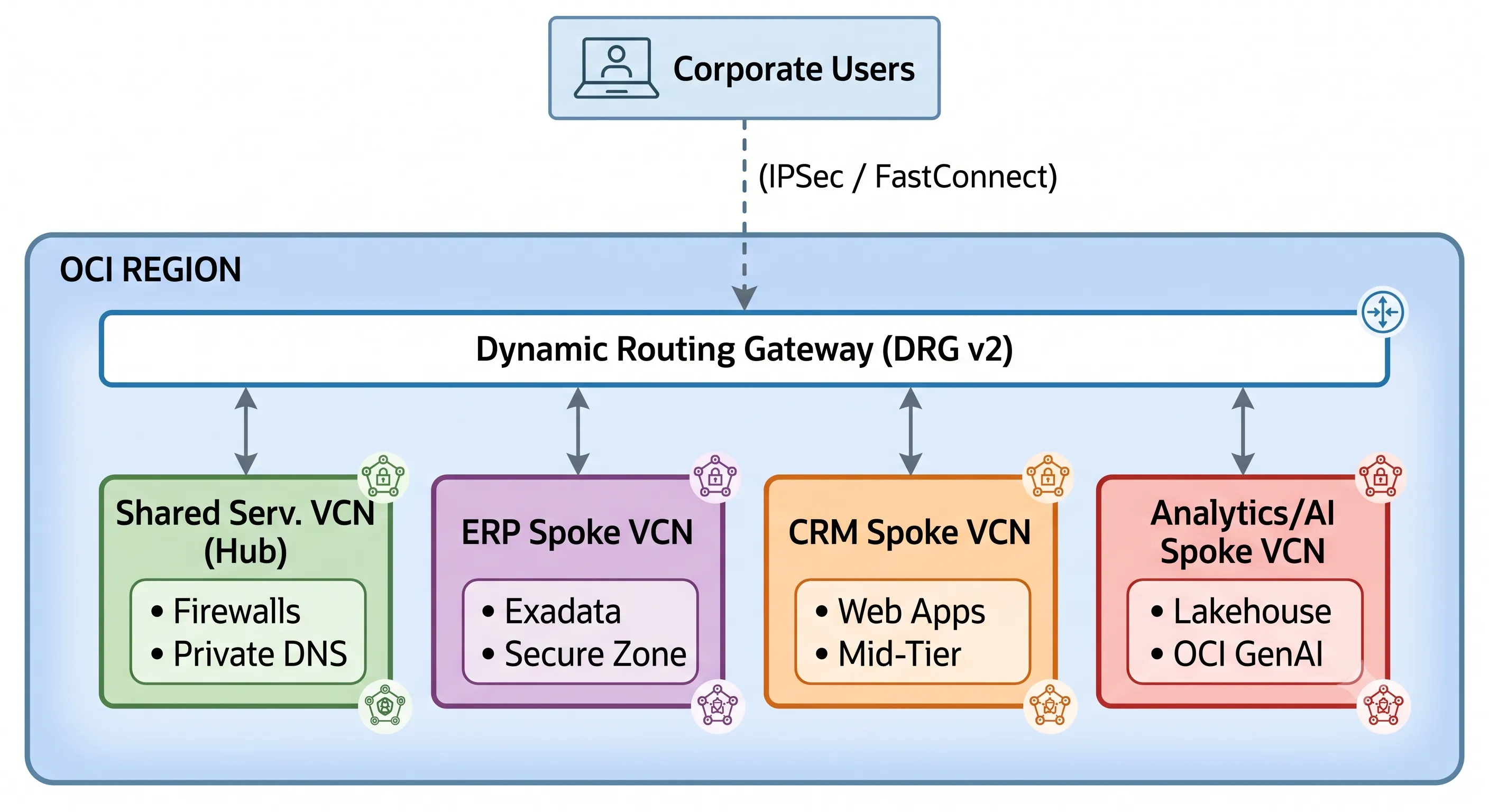
Figure 5 · Oracle Enterprise OCI Production Reference Architecture
Workload Segmentation and VCN Architecture
Nexus Retail Global divides its cloud footprint into four independent spoke networks connected to a central Hub:
- Shared Services VCN (The Hub): NGFW pool, internal DNS, deployment tools, and central management bastions.
- ERP Spoke VCN: Oracle Exadata Database Service for inventory and financial backends — enclosed in a Maximum Security Zone.
- CRM Spoke VCN: Client-facing web apps and APIs behind OCI Flexible Load Balancers.
- Analytics & AI Platform VCN: OCI Data Flow, Autonomous Data Warehouse, and OCI Generative AI endpoints.
Network Traffic and Routing Flows
When an internal corporate user connects from on-premises to access the ERP application, the connection enters through OCI FastConnect into the central DRG. The DRG routes traffic through the Shared Services VCN firewall cluster for deep packet inspection. Once cleared, the firewall forwards the packet back through the DRG into the ERP spoke's private subnet.
Disaster Recovery and High Availability
Nexus Retail Global duplicates this architecture across a secondary OCI region. The DRGs in both regions are linked via Remote Peering Connection over Oracle's private global backbone. Database synchronization runs via Oracle Data Guard replication; Object Storage buckets use cross-region replication rules. If the primary region fails, the secondary environment assumes production workload in minutes.
10 · The Short Version — 8 Things Oracle Recommends
- Design your enterprise network before creating the first VCN.Fix CIDR block allocations and network boundaries before provisioning resources to avoid costly re-architecting.
- Build around Hub-and-Spoke instead of a single VCN.Isolate workloads into dedicated spoke networks linked to a secure, central hub.
- Centralize common services in a Shared Services VCN.Host firewalls, DNS, and management tools in a single utility network.
- Use the DRG as the enterprise connectivity hub.Leverage DRG v2 to orchestrate transit traffic between spokes, on-premises, and backup regions.
- Separate production, development, and testing.Maintain strict isolation so dev failures never threaten production systems.
- Enable Security Zones wherever possible.Implement platform-enforced guardrails to stop dangerous configurations before they happen.
- Build governance with compartments, IAM, and tagging from day one.Keep management, access controls, and financial reporting decoupled from network layers.
- Design for the organization you'll have in three years.Build structural foundations to absorb hundreds of new applications effortlessly.
Small OCI environments grow by adding resources. Large OCI environments grow because their architecture was designed to handle growth from the very beginning.
11 · Frequently Asked Questions
What is an OCI Hub-and-Spoke network architecture?
Does OCI DRG v2 support transit routing across multiple VCNs?
Why should enterprise workloads use an OCI Service Gateway?
How do OCI Maximum Security Zones prevent configuration drift?
What is the risk of overlapping CIDR blocks in OCI cloud design?
How do you avoid asymmetric routing when using firewalls in an OCI Hub VCN?
What resources belong inside an OCI Shared Services VCN?
What is the structural difference between an OCI compartment and a VCN?
Can an OCI Security Zone be applied to an existing compartment?
How does cross-region disaster recovery work in an OCI Hub-and-Spoke layout?
Ready to architect your enterprise OCI landing zone?
At ExaGuru, we help enterprise teams design and deploy production-ready Hub-and-Spoke network architectures — with hands-on labs covering DRG v2 transit routing, Security Zones, Shared Services VCN design, and Terraform-based landing zones.
- Real-world labs — build VCNs, configure DRG route distributions, and break/fix transit routing.
- Enterprise scenarios — architecture reviews modeled on production OCI deployments.
- Industry mentors — Oracle Cloud Infrastructure Enterprise Architecture professionals.