01 · Introduction
At first glance, both environments look nearly identical. They run the same Oracle Database software, execute the same SQL queries, and serve the same applications. Yet one system completes reports in minutes while the other takes hours. One easily handles thousands of transactions per second, while the other struggles under peak workloads.
Oracle Exadata changes where SQL processing happens, how data moves across the infrastructure, and how storage participates in query execution. To understand why Exadata consistently outperforms traditional Oracle database servers, you have to look behind the scenes.
Q: What is the main structural difference between Oracle Exadata and a traditional server stack?
A: Traditional architectures rely on an isolated compute layer and a "dumb" SAN storage array connected via Fibre Channel, forcing raw data block transfers. Oracle Exadata is a co-engineered system that uses an intelligent storage layer (running the CELLSRV daemon) and a 100 Gbps RoCE network fabric to process SQL queries directly at the storage level, transferring only filtered datasets back to the compute nodes.
02 · Is Exadata Just a More Powerful Database Server?
A common misconception among infrastructure teams and procurement managers is that Oracle Exadata is simply a premium, high-end commodity server wrapped in a shiny rack with a premium price tag. It is frequently viewed as "just another x86 box with lots of RAM and fast disks."
The Traditional Oracle Architecture
In a standard DIY infrastructure, an enterprise purchases components from various vendors: compute nodes from Vendor A (Dell, HPE, Cisco), SAN switches from Vendor B (Cisco, Brocade), and storage arrays from Vendor C (Pure Storage, NetApp, EMC). The DBA installs the operating system, configures volume managers, maps LUNs over Fibre Channel or iSCSI, and finally installs the Oracle Database software.
In this model, the hardware layer is completely oblivious to what the software layer is doing. The SAN storage array has no idea that the bytes it is serving belong to an Oracle tablespace, an index, or an undo segment. It simply sees requests for logical block addresses (LBAs). The database server treats the storage as a dumb pipe that returns blocks upon request.
The Engineered Systems Approach
Oracle Exadata is an Engineered System. The hardware components (servers, storage, networking) and the software components (Oracle Database kernel, Operating System, Storage Server software) are co-engineered in the same laboratory. When Oracle engineers modify the database kernel, they simultaneously update the Exadata Storage Server code to support it.
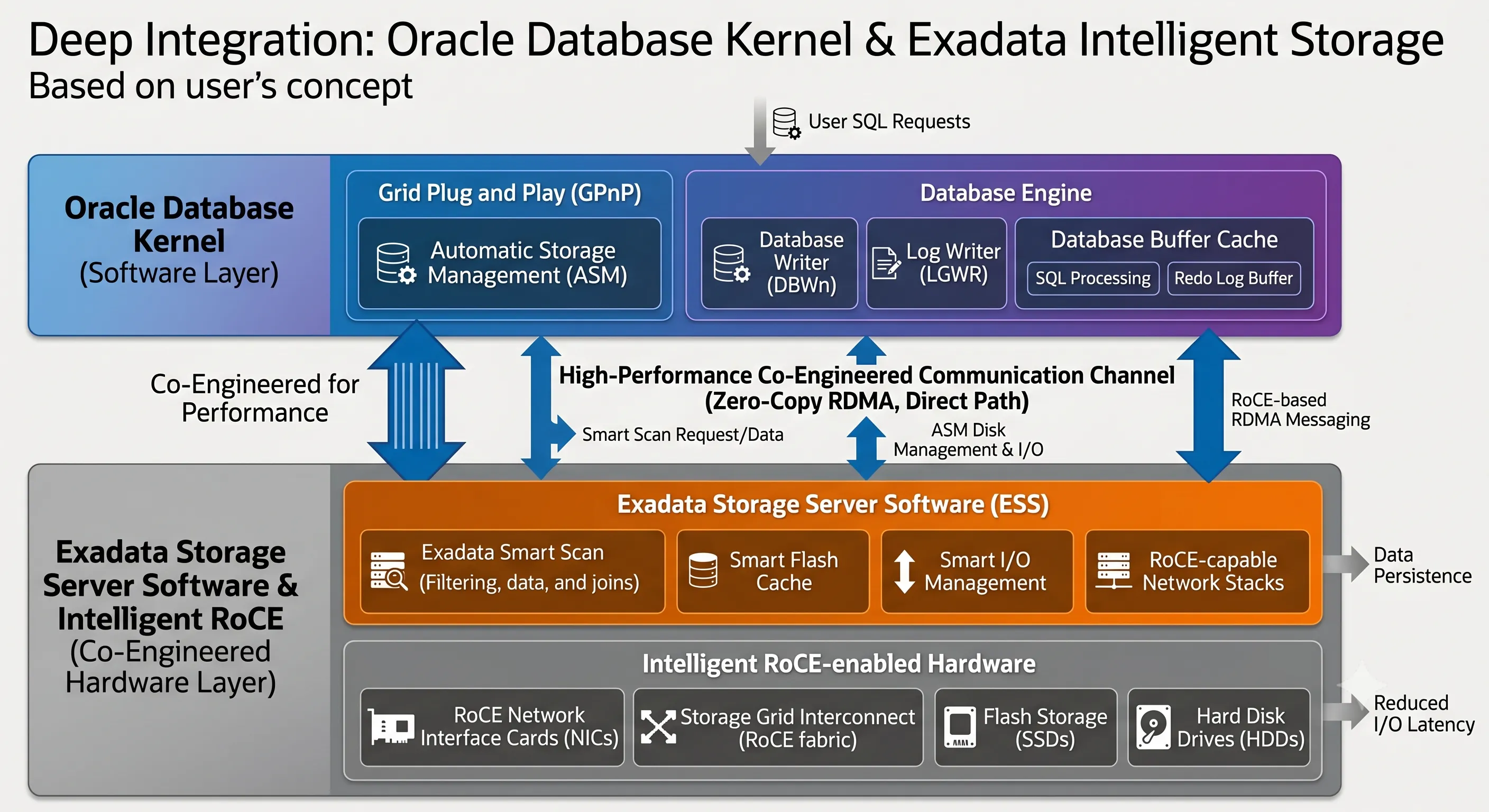
Figure 1 · Co-engineered Oracle Database kernel and Exadata Storage Server software
Why Exadata is More Than Premium Hardware
Exadata consists of two distinct server types within a single, highly optimized footprint:
- Compute Nodes (Database Servers): Run the Oracle Database instances (oracle background processes, SGA, PGA).
- Storage Cells (Storage Servers): Run specialized Exadata Storage Server software with their own CPUs, memory, NVMe flash cards, and a dedicated software stack that understands Oracle database formats, block layouts, and SQL semantics.
The integration of these elements transforms Exadata from a collection of fast components into a single, cohesive database machine.
03 · How Does SQL Execution Differ?
To contrast how these systems execute SQL, consider a production database containing a massive sales table:
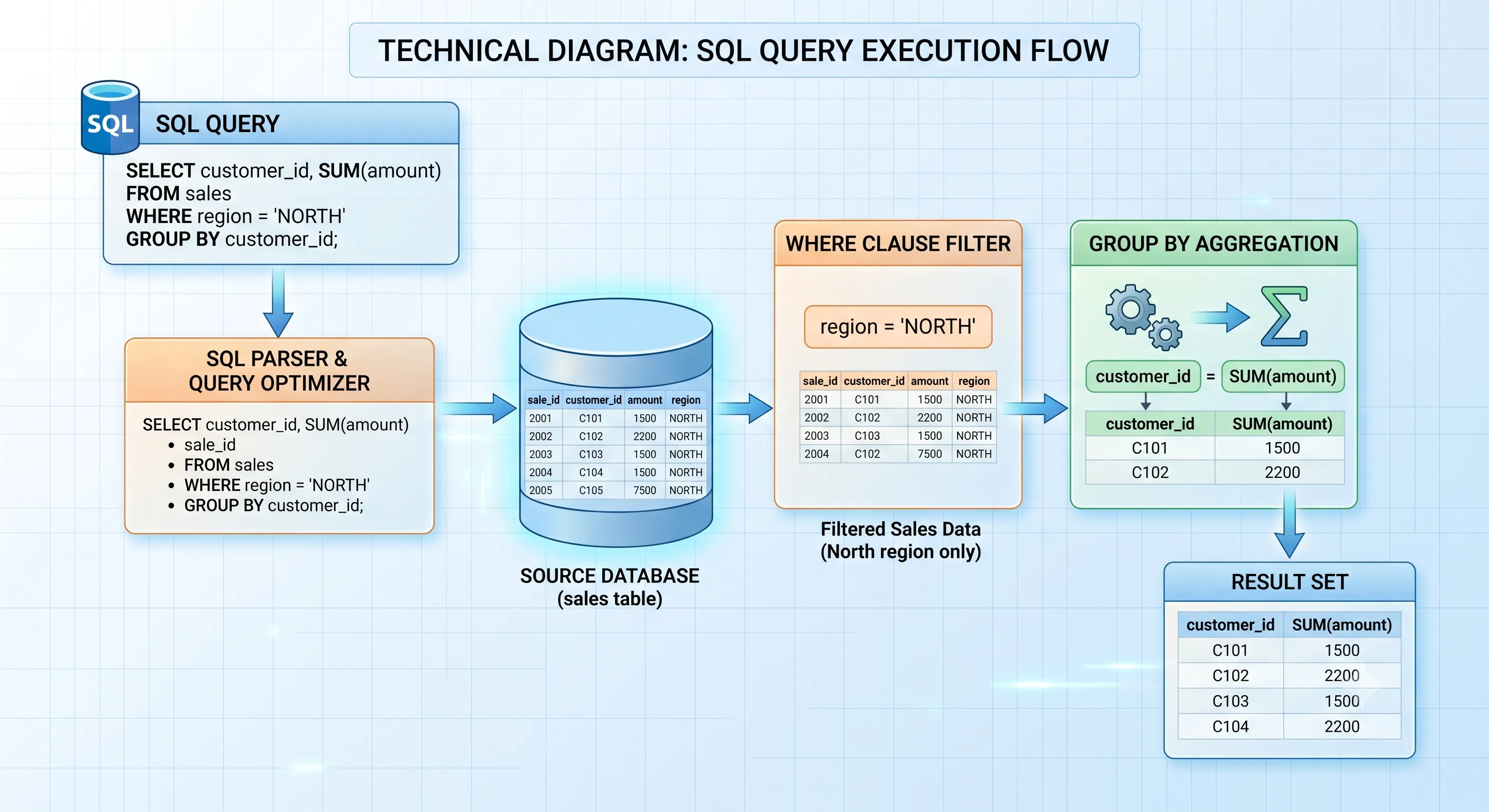
Figure 2 · SQL query lifecycle — traditional server vs Exadata
Assume the sales table is 1 TB in size. The rows matching region = 'NORTH' constitute only 10 GB of that data. We only need two columns (customer_id and amount), which make up just 1 GB of data within those matching rows.
The Traditional Oracle Database Approach
- SQL Parsing: The database server parses the query and produces a Full Table Scan (FTS) execution plan.
- Buffer Cache Check: The blocks are not in the SGA Buffer Cache.
- Storage Requests: The database server issues thousands of sequential I/O requests to the SAN, requesting the full 1 TB of data blocks.
- Block Transfers (The Bottleneck): The SAN pushes all 1 TB of raw blocks across the Fibre Channel network to the database server.
- Database Filtering & CPU Workload: The database server's CPUs evaluate every row to check if
region = 'NORTH', then discard unwanted columns. - Result Generation: After consuming massive I/O bandwidth and CPU cycles, the server aggregates the final result.
The Oracle Exadata Approach
- SQL Parsing: The Compute Node parses the query and recognizes it can offload this operation.
- Smart Scan Offloading: The Compute Node sends SQL predicates and required columns to Storage Cells via the RoCE network.
- Cell Offloading & Predicate Filtering: Storage cell CPUs inspect blocks locally and filter out rows where region is not 'NORTH'.
- Column Projection: The storage cell strips away all columns except
customer_idandamount. - Data Return: Only 1 GB of filtered, projected data returns to the Compute Node instead of 1 TB.
- Final Processing: The Compute Node performs the final GROUP BY aggregation and returns the result.
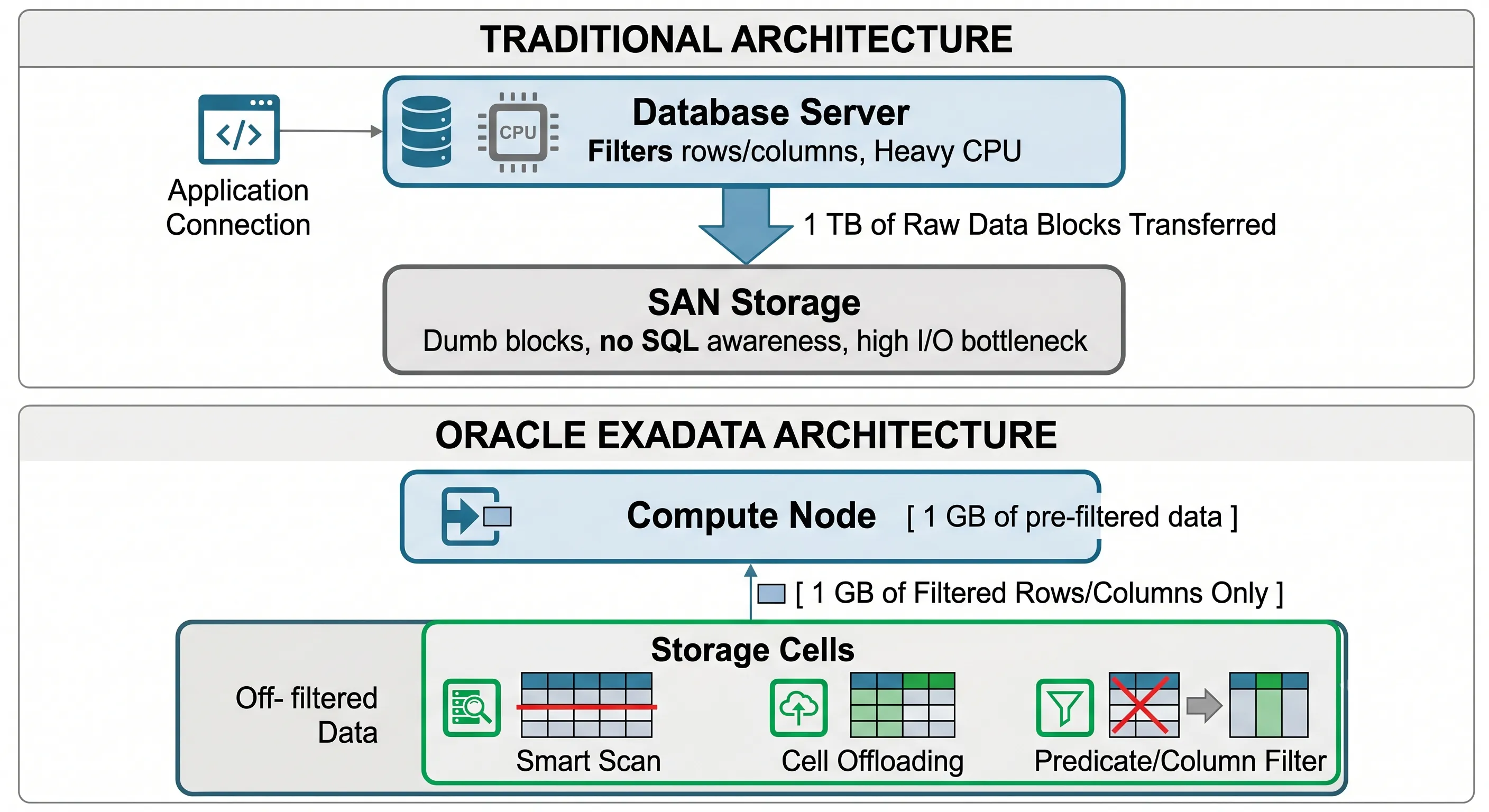
Figure 3 · Traditional vs Exadata SQL execution paths
By shifting the processing workload down to the storage layer, Exadata eliminates the I/O bottleneck that cripples traditional architectures during large-scale operations.
Q: What is the difference between a traditional full table scan and an Exadata Smart Scan?
A: A traditional full table scan forces the database server to request and ingest every data block from the storage array over the SAN network, filtering only after data reaches database memory. An Exadata Smart Scan sends filtering criteria directly to the storage cell, which evaluates rows and columns locally and returns only matching data to the compute node.
04 · Why is Storage Intelligent in Exadata?
In a standard enterprise architecture, storage arrays are passive observers. They include sophisticated features like snapshots, replication, and thin provisioning, but they remain unaware of the application logic. Exadata Storage Cells actively participate in query execution through several proprietary software subsystems.
The Cell Server (CELLSRV) Daemon
Every Exadata Storage Cell runs a multithreaded background process called CELLSRV. This is the heart of Exadata's intelligence. CELLSRV communicates directly with Oracle Database instances on the compute nodes. It understands Oracle database block structures — including encrypted blocks and compressed data structures like Hybrid Columnar Compression — and can parse SQL metadata sent by the database kernel.
Storage Indexes: The Power of Elimination
On traditional infrastructure, if an index does not exist for a query, the database has no choice but to read every block. Exadata provides an automated, in-memory metadata structure called a Storage Index, maintained entirely within the RAM of the Storage Cells.
A Storage Index divides physical disk storage into 1 MB regions called Storage Regions. For each region, the storage cell tracks the minimum and maximum values of columns used in query predicates. When a query arrives with a WHERE region = 'WEST' clause, CELLSRV checks the Storage Index. If the min/max range for a specific 1 MB region is 'NORTH' to 'SOUTH', CELLSRV knows with absolute certainty that no rows matching 'WEST' exist in that region — and completely skips reading that entire chunk of disk/flash.
Smart Flash Cache
Traditional storage arrays feature flash caching on a Least Recently Used (LRU) algorithm. Large full table scans or backups often flush useful OLTP blocks out of the cache. Exadata Smart Flash Cache works in concert with the database kernel. The database tells the storage cell what type of block is being read or written:
- Control files and index blocks are prioritized and kept in flash cache.
- Large sequential full table scans can bypass the flash cache or utilize it intelligently without evicting high-priority transactional blocks.
- DBAs can configure pinning policies at the database object level (e.g.,
ALTER TABLE VIP_ORDERS STORAGE (CELL_FLASH_CACHE KEEP)).
05 · What Changes in Networking?
The internal network topology is a frequent point of failure and bottleneck in custom-built database infrastructure.
Traditional Network Limitations
A typical enterprise environment routes database traffic across multiple isolated networks: Public/Client Network (Ethernet), Cluster Interconnect (RAC cache validation), and Storage Network (Fibre Channel switches, HBAs, and SAN controllers). When a database node requires data from SAN storage, it must cross multiple software abstraction layers — OS SCSI translation, Fibre Channel framing, and storage controller unwrapping. Microsecond delays compound into milliseconds under heavy loads.
The Exadata Network Evolution
Modern Oracle Exadata architectures replace the traditional mix of Fibre Channel and standard Ethernet with an internal fabric built entirely on RDMA over Converged Ethernet (RoCE) operating at 100 Gbps per link. The core performance breakthrough is Remote Direct Memory Access (RDMA).
With RoCE and RDMA on Exadata, a compute node can read or write data directly from or to the memory of a Storage Cell at the hardware level, bypassing the operating system kernel, network software stack, and CPU interrupts of the target storage cell. This lowers internal network latency to sub-millisecond levels — frequently under 100 microseconds.
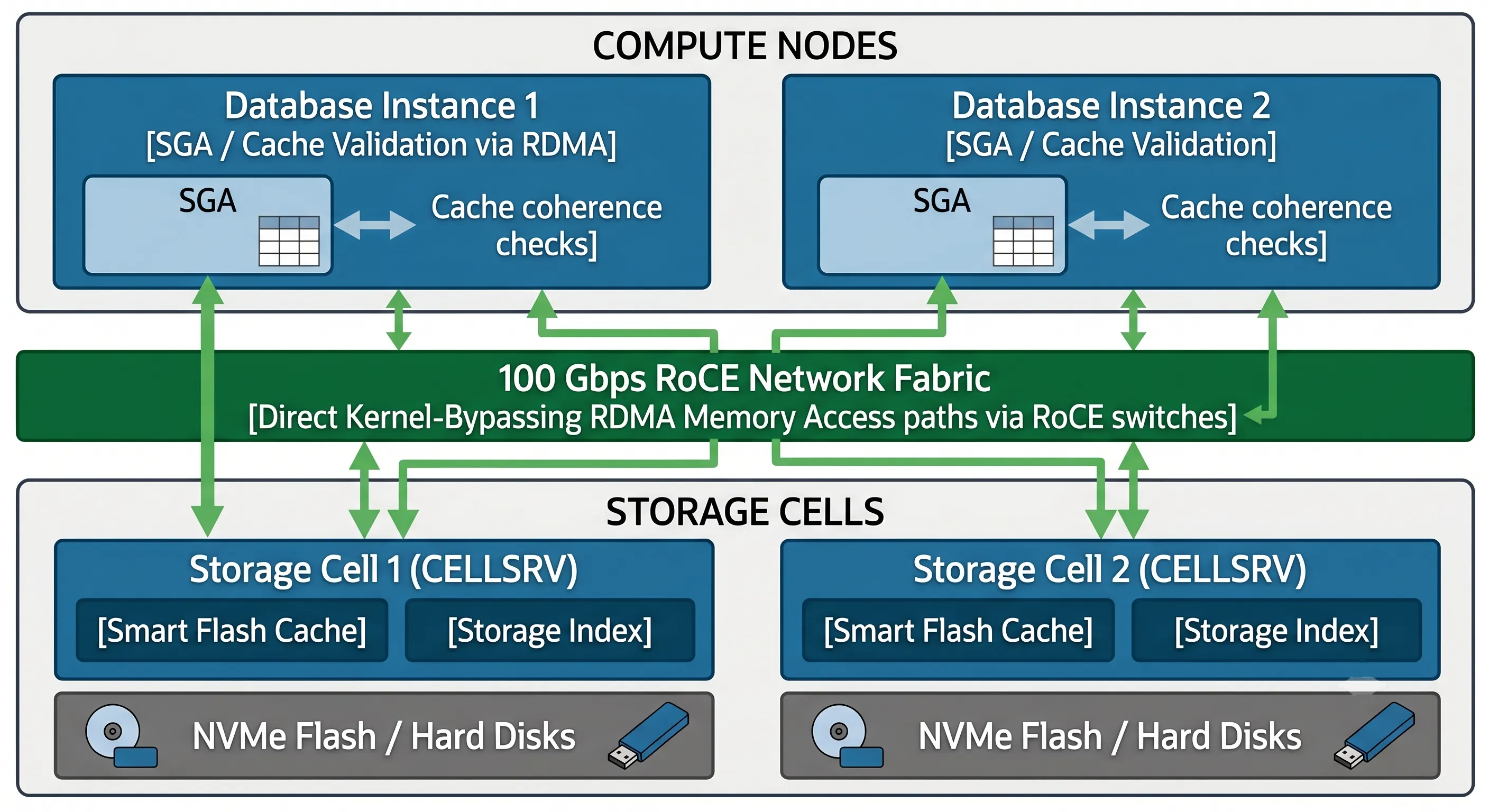
Figure 4 · Exadata internal 100 Gbps RoCE network fabric
06 · How Does Exadata Reduce CPU Usage?
A paradox of database tuning is that I/O performance problems often manifest as high CPU utilization on the database server.
The Traditional Resource Drain
When a traditional server executes an analytical query over a massive dataset, the operating system and Oracle Database kernel must process every single block coming across the fabric — mapping blocks into the buffer cache, managing latching and mutex mechanisms, and parsing individual rows to evaluate SQL predicates. If a query scans a 10-million-row table to summarize data for 5 specific customers, the database server's CPU spends most of its energy unpacking blocks it will ultimately discard.
The Exadata Efficiency Model
Exadata addresses this by filtering early, transferring less data, and processing fewer blocks overall. Because Storage Cells handle predicate evaluation and column projection via Smart Scan, the data payload returned to Compute Nodes contains only relevant rows and columns. Buffer cache is not flooded with transient blocks, latch contention drops, and Compute Node CPUs are freed from filtering millions of discarded rows.
On a traditional server, a financial reconciliation routine consumes 95% CPU for four hours, driven by db file scattered read wait events and intensive row evaluation.
When migrated to Exadata, the same process runs with database CPU utilization under 20%. The heavy lifting of reading and discarding billions of historic transactions is offloaded to storage cell processors, keeping the compute node responsive to concurrent OLTP users.
07 · High Availability and Scalability
High Availability Frameworks (Traditional)
In a custom-built infrastructure, high availability depends on separate layer configurations: multipathing software, volume managers, Oracle Grid Infrastructure / ASM, and Oracle RAC. Scaling is highly disruptive — buy more storage shelves, provision new LUNs, present them to all cluster nodes, expand ASM disk groups, rebalance storage, and potentially buy a larger database server chassis.
The Exadata Grid Plug-and-Play Model
Exadata unifies high availability and scalability into a preconfigured blueprint. It relies on Oracle RAC for compute-layer redundancy and Oracle ASM for storage-layer resilience, with custom integration:
- Cell Failover Redundancy: If a storage cell fails, ASM instantly redirects I/O to partner cells holding redundant data mirrors — no interruption to SQL execution.
- Predictive Failure Analysis: Exadata monitors NVMe flash endurance, drive health, temperatures, and RoCE link drop rates — isolating degraded components and proactively rebuilding data before a crash.
- Elastic Scale-Out Architecture: Slide an additional Storage Cell into the rack, connect it to the internal RoCE switches, and run a single command to add it to the ASM disk group. The environment balances itself online with zero application downtime.
08 · Is Exadata Always the Better Choice?
While Oracle Exadata provides a highly optimized architecture for Oracle databases, it is an enterprise-tier engineering system designed for specific operational profiles. It may not be necessary or cost-effective for every workload.
Workloads That Benefit Significantly
- Massive Data Warehouses (DW/BI) with multi-TB or petabyte datasets
- High-Throughput OLTP (core banking, e-commerce, ERP)
- Large-Scale Database Consolidation with IORM
- Mixed Workloads (OLTP by day, analytics by night)
Workloads That May Not Require Exadata
- Small, static databases under 100 GB with light traffic
- Isolated non-production environments (dev, sandbox, testing)
- Low-transaction departmental applications
09 · Technical Comparison Matrix
The following matrix details the definitive differences between a custom-built traditional server infrastructure and an integrated Oracle Exadata system.
| Architectural Feature | Traditional Database Server Stack | Oracle Exadata Engineered System |
|---|---|---|
| SQL Processing Location | Exclusively on the Database Compute Server | Offloaded to Intelligent Storage Cells via Smart Scan |
| Network Fabric & Protocol | Fibre Channel / iSCSI (SCSI Command Stack) | 100 Gbps RoCE (RDMA over Converged Ethernet) |
| Network Latency Performance | Millisecond range due to OS context switches | Sub-100 microsecond range via kernel-bypassing RDMA |
| Storage Awareness | Block-level blind (Logical Block Addresses only) | Database-aware via the CELLSRV background daemon |
| Data Reduction Mechanism | None — pulls raw blocks across the network | Storage Indexes (skipping 1 MB storage regions), predicate filtering, column projection |
| Flash Caching Strategy | Generic LRU block-replacement algorithm | Database-aware Smart Flash Cache with object-level pinning |
| High Availability Model | Multi-vendor: multipathing, volume managers, ASM, RAC stitched together | Integrated: RAC + ASM + Cell redundancy + predictive failure analysis |
| Scalability Model | Disruptive: new LUNs, ASM rebalance, potential server chassis upgrade | Elastic: add Storage Cells online with a single ASM command |
| Optimizer Awareness | Standard cost-based optimizer calculations | CBO adapts plans — full table scans cost significantly less due to offloading |
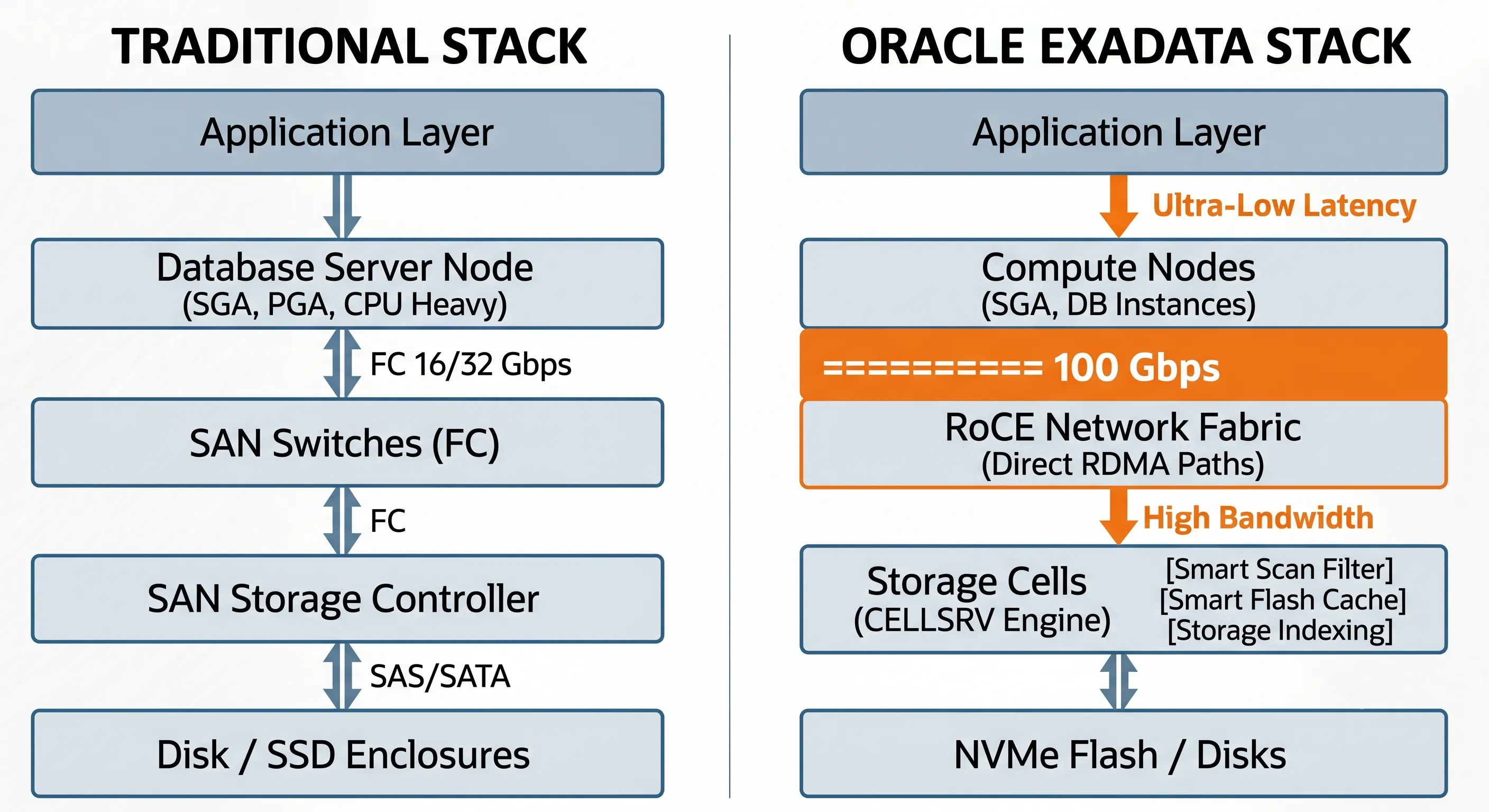
Figure 5 · Traditional Oracle infrastructure vs Oracle Exadata enterprise architecture
10 · Common Misconceptions
- Exadata is just expensive hardware.The value is in the proprietary Exadata Storage Server software layer — Smart Scans, Storage Indexes, and kernel-bypassing RDMA. You are investing in an architectural framework, not raw compute power.
- More CPU equals better performance.If the bottleneck is the SAN fabric (
db file sequential readordirect path readwait states), faster CPUs simply wait longer for data. Exadata shifts work to storage cells, scaling independently of database tier CPU limits. - Smart Scan works for every query.Smart Scan is designed for large operations like Full Table Scans or Fast Full Index Scans. For single-row transactional lookups, Exadata bypasses Smart Scan and reads the exact block directly via ultra-fast RDMA.
- Storage doesn't affect SQL execution plans.The Oracle cost-based optimizer is fully aware of Exadata capabilities. It adapts calculations and may choose a clean Smart Scan path over a complex index scan that it would have chosen on traditional infrastructure.
- Exadata replaces Oracle Database.Exadata runs the standard Oracle Database Enterprise Edition engine. DBAs use the same commands (CREATE TABLE, ALTER SYSTEM, RMAN BACKUP). The difference lies entirely underneath the SQL execution layer.
- Exadata is only for very large enterprises.With elastic eighth-rack configurations and cloud subscription models like Exadata Cloud@Customer (ExaCC), mid-sized organizations can leverage Exadata architecture without substantial upfront capital expenditure.
11 · Frequently Asked Questions
Do applications need to be rewritten to take advantage of Exadata?
No. Application transparency is a key design feature. Because it runs the standard Oracle Database engine, your applications issue SQL statements exactly as they did before. The database kernel and storage cells determine behind the scenes whether to offload via Smart Scan or stream via RDMA.
What exactly is Hybrid Columnar Compression (HCC)?
HCC groups rows into logical structures called Compression Units (CUs), organized column-by-column rather than row-by-row. This layout achieves high compression ratios (often 10× to 50×) for analytical data warehouses without compromising performance.
How does Exadata accelerate OLTP write operations?
Exadata Smart Flash Log broadcasts redo writes concurrently to both physical disks and ultra-low latency NVMe flash on storage cells. Whichever medium responds first wins, eliminating disk write latency from the transactional critical path.
Can I run non-Oracle databases inside Exadata Storage Cells?
No. Storage Cells are closed appliances dedicated exclusively to running Oracle Exadata Storage Server software. You cannot install third-party applications, file systems, or alternate database management systems.
What is IORM and why is it important for consolidation?
I/O Resource Manager (IORM) integrates with Oracle Database Resource Manager to allocate storage cell I/O cycles based on user-defined policies, ensuring high-priority OLTP databases maintain consistent performance during large parallel batch loads.
Does Exadata eliminate the need for DBAs?
No. Exadata automates infrastructure tasks — storage provisioning, LUN creation, volume layout — but does not replace the strategic DBA role. Focus shifts to schema design, index management, SQL tuning, data lifecycle planning, and security architecture.
What is the difference between on-premises Exadata and Exadata Cloud@Customer (ExaCC)?
On-premises Exadata requires the enterprise to purchase, house, and manage the physical rack. ExaCC places identical physical Exadata hardware in your data center but delivers it as a cloud subscription — Oracle manages infrastructure, patching, and hardware lifecycle remotely.
12 · 8 Architectural Differences That Matter
For senior leadership and enterprise architects, the fundamental distinctions can be summarized in eight distinct architectural shifts:
- Workload OffloadingTraditional servers process almost all SQL on the database server; Exadata pushes much of that work down to intelligent Storage Cells.
- Bandwidth ConservationSmart Scan filters rows and columns at the storage layer, dramatically reducing unnecessary data transfers.
- Intelligent SkippingStorage Indexes avoid reading entire disk regions that cannot contain matching data based on min/max metadata tracking.
- Kernel-Bypassing InterconnectRoCE networking enables ultra-low-latency, high-bandwidth communication using direct hardware-level RDMA.
- Database-Aware CachingSmart Flash Cache accelerates frequently accessed database objects instead of relying on generic block-level SSD caching.
- Co-Engineered StackHardware, network switches, operating systems, and Oracle software integrate into a single engineered system optimized for Oracle Database workloads.
- Simplified ArchitectureASM, RAC, Cell redundancy, and intelligent storage provide HA and performance natively without multi-vendor complexity.
- Data vs. ProcessingTraditional infrastructure moves large amounts of data to the database server for processing; Exadata moves processing closer to where data physically resides.
13 · Conclusion
Traditional Oracle database servers become faster by adding more hardware. Oracle Exadata becomes faster by changing the architecture itself.
That is why two environments running the same Oracle Database software can deliver dramatically different performance. The same query, the same data volume, the same DBA commands — but an entirely different execution path underneath.