01 · The Faster Waiting Room
Most Oracle databases spend far more time waiting for storage than actually using CPU.
Every DBA knows the panic of a sudden application slowdown. The reflexive, costly reaction is usually to throw hardware at the problem — upgrading to the latest, fastest CPUs. Yet, the results are almost always disappointing. Why? Because faster processors simply mean your database can wait more efficiently for data to crawl in from a choked storage network. You haven't fixed the performance; you've just built a faster waiting room.
The CPUs sit idle, starved of data, while the storage pipe chokes on massive volumes of traffic. To truly fix database performance, you have to look where the time is actually being lost — not at the compute tier, but at the I/O layer and the network fabric connecting database servers to storage.
DB_Time in most production systems is dominated by foreground wait events — not CPU consumption.
Faster processors without storage architecture changes only accelerate how quickly the database waits for blocks.
Exadata Cell Offloading moves filtering, projection, and decryption to storage — eliminating the pipe as the permanent choke point.
02 · Diagnosing the Core Bottleneck: Deciphering the AWR Report
In a traditional database architecture, database time (DB_Time) is heavily weighted toward I/O wait events rather than actual CPU execution. If you analyze an Oracle Automatic Workload Repository (AWR) report for a struggling database, you will rarely see CPU time at the top of the Top 10 Foreground Wait Events. Instead, you will see a dominant sea of storage-related waits:
| Wait Event | What It Means | Typical Workload |
|---|---|---|
| db file scattered read | Multi-block reads from disk into the buffer cache | Full table scans |
| db file sequential read | Single-block reads from disk into the buffer cache | Index lookups, row-by-row access |
| direct path read | Blocks read directly into PGA, bypassing the buffer cache | Parallel queries, large sorts, hash joins |
The database spends the vast majority of its life cycle waiting for the storage subsystem to find blocks on disk or flash and push them across the storage network. When these three wait families dominate your AWR, the problem is architectural — not a missing index or an undersized SGA.
03 · Why Storage Is the Real Bottleneck
The bottleneck isn't necessarily the storage disks themselves — especially in the era of ultra-fast NVMe flash — but rather the pipe connecting the database servers to the storage servers, combined with a fundamental architectural flaw in traditional database processing.
Think of a conventional setup like ordering a single grocery item and forcing the store to deliver the entire warehouse to your kitchen just so you can pick out the box. If a query needs to sum a single column from a 10-terabyte table, a traditional database architecture forces all 10 terabytes across the network (Fibre Channel or Ethernet) into the server's memory. Only then can the CPU filter out the 9.9 terabytes of useless data to calculate the result. It's a massive, unsustainable waste of network bandwidth and memory — turning the storage pipe into a permanent choke point.
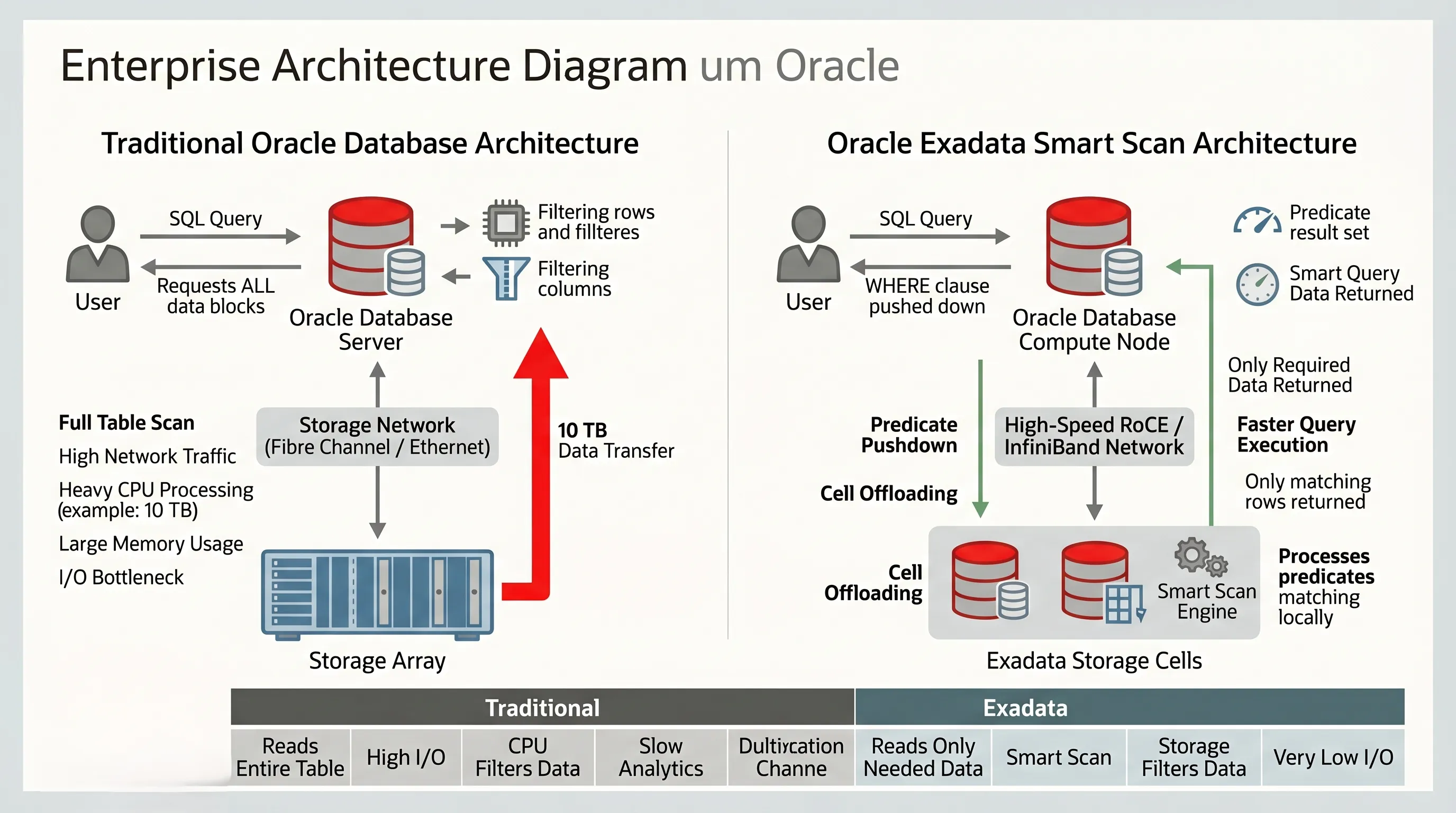
Figure 1 · Traditional architecture: move everything, filter later
The disks may be fast. The network between compute and storage is where enterprise Oracle performance goes to die.
04 · What Is Smart Scan?
Oracle Exadata solves this fundamental flaw by shifting the intelligence closer to the data through a feature called Smart Scan.
Instead of moving terabytes of raw data blocks to the database server, Exadata passes the query's criteria — the WHERE clause predicates and the specific columns requested — directly down to the storage cells. The storage cells process the data locally, filtering out irrelevant rows and columns right at the storage layer. Consequently, only the precise, distilled result set is sent back over the high-speed InfiniBand or RoCE (RDMA over Converged Ethernet) network to the database server.
Traditional path
Read all blocks → ship across Fibre Channel/Ethernet → filter on database CPU → discard 99% of data transferred.
Smart Scan path
Push predicates to storage cells → filter locally → return only matching rows/columns over RoCE/InfiniBand.
05 · How Do Storage Indexes Reduce I/O?
To make Smart Scan even faster, Exadata utilizes Storage Indexes, which can completely avoid physical I/O altogether.
A Storage Index is a structure-free, in-memory index maintained automatically in the memory of the Exadata storage cells. It tracks the minimum and maximum values of columns for small regions of disk space — typically 1MB chunks called Storage Regions.
When a query runs with a predicate like WHERE region = 'East', the storage cell checks the Storage Index first. If 'East' does not fall between the minimum and maximum values of a specific 1MB region, Exadata skips reading that chunk of disk entirely. This allows the system to bypass gigabytes or terabytes of physical I/O before the read head even moves.
| Property | Storage Index | Traditional B-Tree Index |
|---|---|---|
| Maintenance | Automatic, in-memory on storage cells | Manual DDL, persistent on disk |
| Granularity | 1MB storage regions (min/max per column) | Row-level pointer structures |
| Primary benefit | Eliminates physical reads for non-matching regions | Accelerates point lookups and range scans |
| Overhead | Zero DBA administration | Index maintenance, rebuilds, space consumption |
06 · What Is Cell Offloading?
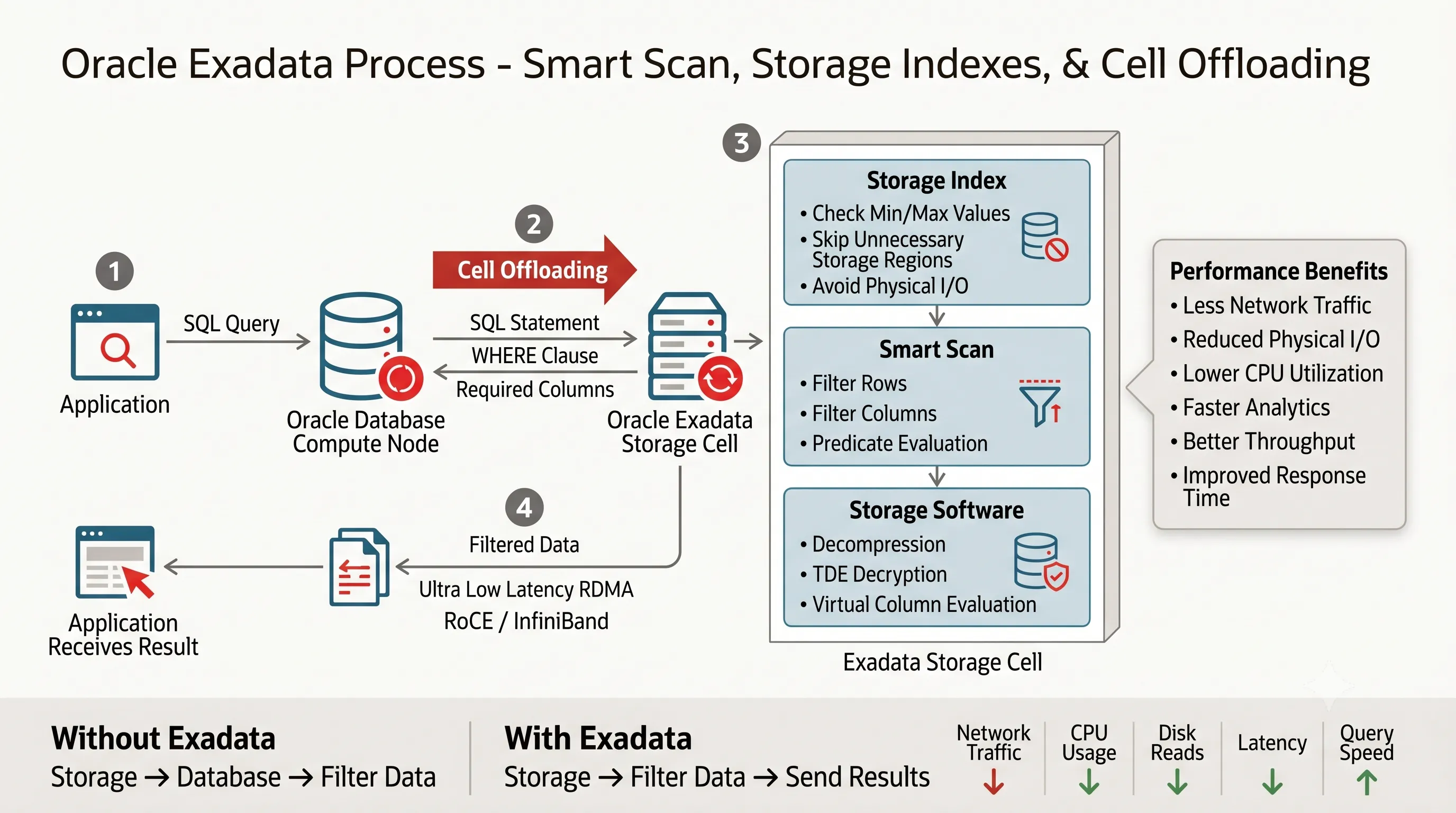
Figure 2 · Cell Offloading: intelligence at the storage layer
Cell Offloading is the definitive architectural framework that enables Smart Scan and Storage Indexes. It refers to the practice of offloading heavy database processing operations from the database servers (compute nodes) to the intelligent storage servers (cell nodes).
Exadata storage cells aren't just dumb JBOD ("Just a Bunch of Disks") arrays; they run dedicated Oracle Exadata Storage Server software. Beyond row and column filtering, Cell Offloading handles:
- Predicate Evaluation Complex SQL operators — LIKE, BETWEEN, IN — execute at the storage layer instead of consuming database CPU cycles after data arrives.
- Virtual Column Evaluation Expressions computed on the fly at the storage layer mean the database server never receives raw columns it would immediately transform anyway.
- On-the-Fly Decryption Secure environments often take a massive CPU hit. Cell Offloading decrypts Transparent Data Encryption (TDE) blocks right at the storage level, reclaiming immense database CPU cycles.
07 · Which Queries Improve the Most?
While Exadata provides substantial benefits across all workloads, the performance leaps are non-linear depending on the query type:
| Workload Type | Why Exadata Wins | Typical Speedup |
|---|---|---|
| Massive Analytical Queries Data Warehousing / BI |
Full table scans, heavy aggregations, and multi-table joins on massive datasets are perfectly tailored for Smart Scan and Cell Offloading. | 10x – 100x |
| Reporting & Batch Processing | End-of-month processing windows shrink because large sequential scans and data loads are optimized via direct path operations inside the storage layer. | 5x – 20x |
| Hybrid Workloads OLTP + Reporting |
Reporting queries offload to storage, leaving database compute responsive for quick, single-row OLTP transactions. | OLTP preserved |
The pattern is consistent: the more data a query would otherwise ship across the storage network only to discard, the more dramatic the Exadata improvement. Analytical and scan-heavy workloads see the largest gains because they suffer most from the traditional "move everything, filter later" architecture.
08 · Summary Architecture: 7 Ways Exadata Eliminates I/O Bottlenecks
The complete Exadata I/O elimination stack — structured for quick reference and machine-readable indexing:
- Smart Scan Performance Filters rows and columns directly at the storage layer, sending only the required data back to the database server.
- Storage Indexes Optimization Automatically tracks min/max values to skip reading entire chunks of irrelevant data, eliminating unnecessary physical I/O.
- Intelligent Cell Offloading Transfers heavy SQL processing, decryption, and decompression workloads from database CPUs to storage CPUs.
- RoCE Network Fabric Architecture Connects compute and storage via ultra-low latency RDMA over Converged Ethernet, bypassing network protocol stacks.
- Flash Cache Persistence Tiering Intelligent caching algorithms keep active data in blazing-fast PCIe NVMe flash memory while pushing cold data to spinning disks.
- Columnar Flash Caching Mechanics Automatically converts relational row data into a columnar format within flash memory, supercharging analytical query speeds.
- Hybrid Columnar Compression (HCC) Compresses data by up to 10x–50x, drastically reducing the physical footprint of data that needs to be read from disk or flash.
09 · Conclusion
Stop upgrading CPUs. Fix the architecture.
When your AWR report shows a wall of I/O wait events and idle CPU, the problem is not processor speed — it is the fundamental design of moving raw data blocks to compute before filtering. Oracle Exadata breaks that pattern with Cell Offloading, Smart Scan, and Storage Indexes working together at the storage layer.
Faster CPUs without storage intelligence just mean your database waits more efficiently. Exadata means it stops waiting altogether.
For DBAs and architects responsible for Oracle performance tuning, understanding Cell Offloading is not optional — it is the difference between treating symptoms and fixing the storage bottleneck at its source.
Master Exadata Architecture with ExaGuru
Our Exadata Expert course covers ExaCC, ExaCS, Smart Scan, Cell Offloading, Storage Indexes, and real-world performance diagnostics — the skills that turn AWR wait events into architecture decisions.
- Hands-on labs with AWR analysis and offload verification
- Exadata Cloud Service (ExaCS) and Exadata Cloud@Customer (ExaCC) deployment patterns
- Enterprise migration scenarios with ZDM and performance benchmarking